Hidden Memories
- 4.8
- Rating
- 1.00M
- Installs
- Free
- Price

 Analysis by App-foxy
I went into Hidden Memories expecting a compact adventure game built around a simple question: what happened during the missing part of the night? I found something more focused than a typical casual mystery. Dark Dome uses the idea of recovering memories as the center of the experience, so the investigation feels personal rather than like a checklist of unrelated clues. The game asks me to look closely, connect details, and stay patient when an answer is not immediately obvious.
That approach makes the first few minutes important. The setting does not need a huge map or a long explanation to create curiosity. Instead, it gives me an uneasy situation and lets the surrounding details do much of the work. I am not simply moving from one puzzle to another; I am trying to understand a night that feels fragmented. That framing gives the adventure a clear identity, especially for players who enjoy mystery games where atmosphere matters as much as the solution.
It is free to start, with optional in-app purchases priced at $2.99 per item. The content rating is Teen, which fits the darker tone and the way the story deals with uncertainty. I would recommend approaching it as a concentrated mystery session rather than as an endless game. Its appeal comes from following the thread of one strange situation, not from collecting a large number of repeatable activities.
You May Also Like

 Blood Strike: 2.5 Anniversary
Blood Strike’s Loadouts Turn Every Drop Into a Tactical Gamble
A close look at Blood Strike’s custom loadouts: how fast access to signature weapons reshapes its battle royale rhythm, rewards preparation, and narrows the gap between fights.

 Pandora - Music & Podcasts
Pandora’s Music Is Easy to Start, but Harder to Recover
Pandora’s strength is its low-effort path from a seed to a station. Its weak spot is how much confidence it asks you to place in connection, setup, and quiet recovery.

 8 Ball Pool
 Is Built on Rivalries, Rematches, and Routine
A close look at the rivalries, rematches, shared routines, and unanswered safety questions that turn a quick pool match into a persistent mobile community.

 Samsung Music
’s Quiet Strength Is Playing What You Already Own
Its reach comes less from spectacle than from dependable access to a personal library. That simplicity is both the app’s strongest retention engine and its ceiling.

 AccuWeather: Weather Radar
AccuWeather Review: A Quick, Clear Forecast for Everyday Decisions
For everyday plans, the best forecast is the one you can understand quickly. AccuWeather makes rain timing, radar, and local conditions easy to act on, with a few trade-offs.

 Hill Climb Racing
Why Hill Climb Racing Still Turns Crashes Into One More Run
A tiny car, a bumpy hill and one more upgrade: Hill Climb Racing keeps resurfacing because its simple chaos makes every near-miss feel personal.
More From Our News Desk



A mystery shaped by visual language
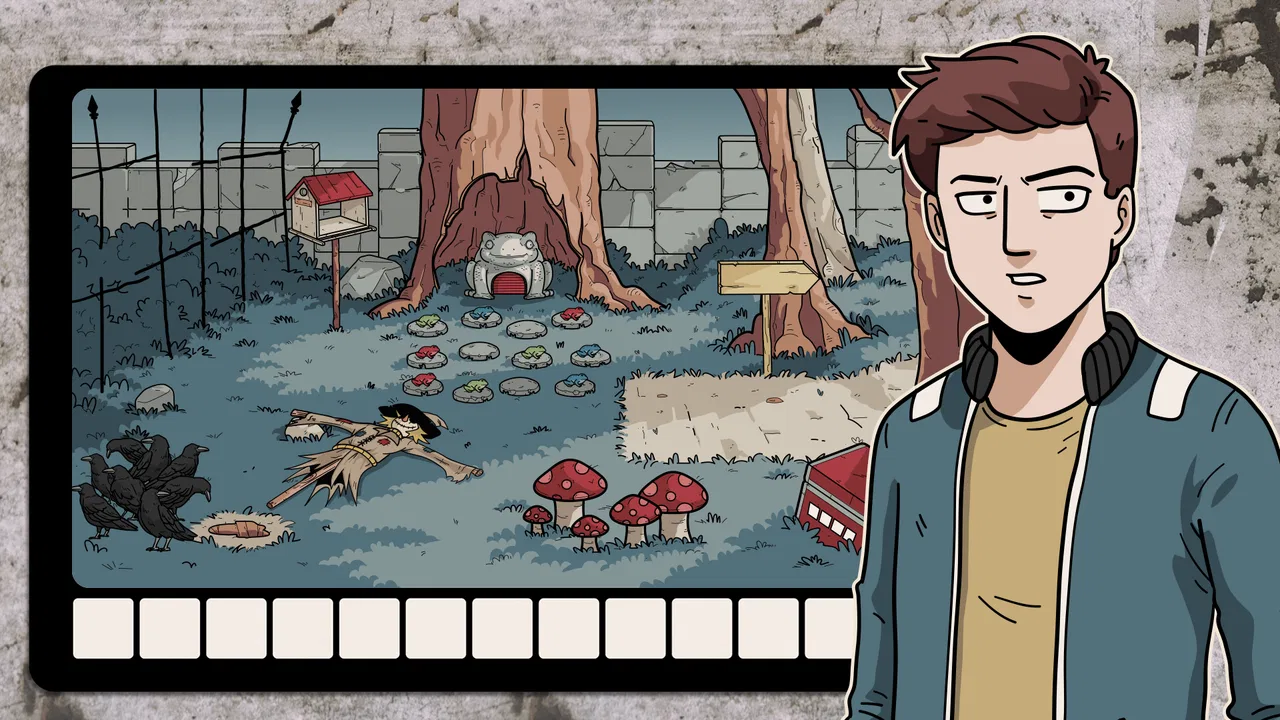
The art direction is one of the strongest reasons the game holds my attention. Dark Dome gives the world a stylized, slightly unsettling look that supports the story without trying to overwhelm it. Objects feel chosen for a reason, spaces invite inspection, and the visual presentation encourages me to ask what is important rather than merely admire decoration. That is a useful distinction in a puzzle adventure: the art has to be attractive, but it also has to communicate.
I like how the setting turns ordinary surroundings into evidence. A room, a personal item, or an apparently minor visual detail can change how I interpret the scene. The game benefits from that restraint because the mystery stays grounded. It does not need constant spectacle to make the situation feel unusual. Instead, the tension grows from the gap between what I can see and what I understand.
The visual style also helps the game feel coherent from one moment to the next. The colors, shapes, and character presentation belong to the same world, so the investigation never feels like it has been dropped into a collection of disconnected screens. This matters more than it may seem. When a mystery relies on memory, visual consistency helps me build a mental map of events and locations, even when the story itself is deliberately unclear.
One practical tip is to examine the screen before tapping through quickly. I found that the best way to play is to treat each location as a scene to read, not just a place to search. Look at the relationship between objects, notice what seems out of place, and remember details that appear too specific to be accidental. This habit is more useful here than repeatedly tapping every area without thinking, because the game’s mood and puzzles work together.
The setting is also a good fit for players who prefer contained adventures. I do not need to learn a giant fictional history before the mystery becomes interesting. The immediate question remains clear, while the world gradually gains meaning through what I discover. Compared with a broad open-world adventure, this is much more intimate. Compared with a purely text-driven mystery, it gives the environment a stronger role in telling me where to look and what to suspect.
There is a trade-off in that design. Players who want bright colors, constant movement, or a cheerful sense of discovery may find the presentation too subdued. The visual language is built around unease and concentration. That is exactly why it works for me, but it also means the game is not the best choice when I want something relaxing in the conventional sense.
Why the atmosphere feels playable rather than decorative
Many adventure games have attractive art that sits beside the mechanics instead of supporting them. Here, the look of the world helps establish how I should behave. A quiet or suspicious scene makes me slow down. A carefully placed object makes me consider whether it connects to an earlier detail. The presentation creates a kind of visual pressure: I feel that I should pay attention, even before I know why.
That pressure is especially effective when I play with the sound on. The setting does not explain everything directly, and the combination of visual clues and audio cues gives the mystery a more complete shape. I would not call the art merely a background layer. It is part of the game’s language, and learning that language is one of the pleasures of the investigation.
Sound, silence, and the rhythm of discovery
The sound design supports the game’s mood by leaving room for uncertainty. Instead of making every moment loud or dramatic, it helps the quieter sections feel intentional. That restraint suits a story about incomplete memories. Silence can make me more aware of a small change in the scene, while a sound cue can make an ordinary action feel more significant.
I found the pacing strongest when I allowed the game to breathe. Rushing from one interaction to the next can reduce the effect of the setting, because the mystery depends on noticing relationships between moments. The rhythm is not built around nonstop action. It alternates between observation, interpretation, and the satisfaction of making a connection. For me, that creates a more personal kind of suspense than a sequence of forced surprises.
This also makes the game suitable for short evening sessions. I can play when I have enough time to concentrate without needing to commit to a long competitive match or a sprawling role-playing campaign. A realistic use case would be playing after work with headphones, keeping a small note of suspicious details, and stopping after a meaningful discovery rather than trying to finish everything while tired. The low-pressure structure works well in that situation.
Headphones are not essential, but I think they improve the experience. The atmosphere depends on subtle presentation, and background noise from a busy room can flatten that effect. If I am playing on public transport or during a noisy break, I can still follow the investigation, but I lose some of the tension created by the quieter passages. This is one of those games where the environment around me changes how much I get from the game’s own environment.
The pacing can be a limitation for players who expect immediate answers. The game is more interested in building a chain of impressions than in explaining the central mystery at once. When I was unsure what to do next, the temptation was to tap randomly or assume I had missed a required interaction. A better response is to revisit what I already know and ask which detail has not yet been given a purpose. That approach keeps the uncertainty productive instead of frustrating.
Another useful habit is to separate observation from interpretation. I try to remember what the game actually showed me before deciding what it means. In a memory-based mystery, it is easy to treat an assumption as a fact and then search for evidence that supports it. Keeping those two stages apart makes the puzzles fairer in practice and helps me notice when the game is encouraging a misleading conclusion.
Mechanics that serve the mystery
At its core, this is an adventure game, but its interaction design is most effective when it stays tied to the investigation. I am not playing for a complicated combat system or a large inventory of upgradeable equipment. The main appeal is examining situations, understanding clues, and working out how the pieces fit together. That focus gives the game a clean identity and prevents the mystery from being buried under unrelated systems.
The best moments come when a solution feels earned by attention rather than by luck. I enjoy the small shift that happens when a detail I noticed earlier suddenly becomes relevant. That kind of payoff is different from simply finding a hidden button. It makes me feel as though I am reconstructing the night, not just completing a mechanical task.
Players who are new to this style of game should know that progress may depend on careful reading of the environment. If an interaction seems unimportant, I still try to remember it. If a location appears familiar, I compare it with what I saw before. The game rewards a methodical approach, and it is less satisfying when treated as a rapid sequence of taps.
I also recommend taking brief notes, especially if I stop playing between sessions. A few words about an object, a location, or an unresolved connection can save time later. This is not because the game requires a formal puzzle notebook; it is because the story’s memory theme makes it natural for the player to reconstruct information too. Writing down a suspicion can also prevent me from confusing a theory with something the game has confirmed.
The optional purchases are worth considering in terms of how I like to play. Since the game is free, I can try its central style before spending anything. If I enjoy solving the mystery independently, I would avoid rushing toward assistance simply because one section is slow. On the other hand, a player who values uninterrupted progress may see a $2.99 item as a reasonable way to reduce friction. I would make that decision only after identifying whether the problem is genuinely difficult or whether I have overlooked a clue.
That distinction matters because hints can change the character of a mystery. A small nudge may restore momentum, while too much help can remove the pleasure of making the connection myself. My preferred workflow is to revisit every relevant location, review the objects I have already found, and only then consider optional assistance. It preserves the investigative feeling while keeping a difficult section from becoming a reason to quit.
The game’s current version is 1.1.33, and it runs on devices using Android 6.0 or later. That makes it accessible to many older Android phones and tablets, although the experience will still depend on the device’s screen, speakers, and general responsiveness. I would check the available space and keep the operating system updated before installing, particularly if I plan to play with sound and visual details intact.
With an average rating of 4.8 from around 26 thousand ratings, the game has clearly found an audience that responds to its mystery format. It has also passed the one-million-install mark, which makes it easier to approach as an established mobile adventure rather than an obscure experiment. Those figures do not replace personal taste, but they match my impression that the game’s focused atmosphere and accessible premise are easy for mystery fans to understand.
Who should play it, and who should skip it
I think it is a strong choice for someone who likes atmospheric point-and-click adventures, visual mysteries, and stories that ask the player to interpret details. It is especially suitable for people who enjoy playing alone with headphones and giving a puzzle enough time to settle. The memory theme adds a useful emotional angle, because the goal is not only to discover a secret but also to understand how the pieces of an experience have been distorted or withheld.
I would skip it if I want fast reflex challenges, character progression, competitive play, or a large world filled with optional activities. It is also not ideal for anyone who dislikes ambiguity. The game’s mood depends on not having every answer immediately, and that can feel slow if I prefer direct objectives and constant confirmation.
Compared with casual hidden-object games, this adventure feels more connected to a single narrative and less dependent on simply locating items on a crowded screen. Compared with a long detective game, it is more compact and easier to approach without a large time commitment. A conventional action adventure may provide more movement and variety, but it will not necessarily offer the same quiet process of rebuilding a mysterious night from fragments.
The main trade-off is therefore clear: Hidden Memories chooses mood and focused deduction over variety and speed. I see that as a strength when I am in the right frame of mind. If I am tired and want a game that tells me exactly where to go, I may find its uncertainty demanding. If I want to feel involved in solving a story rather than merely watching it unfold, the slower rhythm becomes part of the reward.
My final view of the atmosphere
After spending time with it, I see the game’s art, sound, setting, and pacing as parts of one deliberate design. The visuals make ordinary spaces feel suspicious, the audio gives quiet moments weight, and the rhythm encourages me to inspect rather than rush. The mechanics are not trying to compete with that mood; they are there to let me participate in it.
Dark Dome has made a game that understands the value of restraint. The mystery works best when I pay attention to small details, keep track of my assumptions, and accept that the next answer may require a second look at something I thought I understood. That is also where the game can test my patience, especially when I want a faster payoff or when I play without enough concentration.
For a free adventure game with optional $2.99 purchases, I think it is an easy recommendation to mystery fans who want a self-contained, atmospheric experience on Android. I would start without buying anything, use headphones if possible, and give each scene enough time to communicate. If the idea of reconstructing a strange night through visual clues appeals to you, Hidden Memories is worth trying. I would not choose it for action or endless replay, but for a carefully paced investigation with a coherent mood, it leaves a memorable impression.
FAQs for Hidden Memories
01What is Hidden Memories about?
Hidden Memories is a story-driven hidden-object game focused on exploring locations, finding carefully concealed items, and uncovering clues connected to a larger mystery. As you progress, the game combines observation challenges with narrative scenes and puzzle-style moments. It is designed for players who enjoy atmospheric investigations, gradual storytelling, and relaxed gameplay rather than fast action or competitive mechanics.
02How does the gameplay work in Hidden Memories?
The main gameplay involves examining illustrated scenes and locating objects listed on the screen. Some chapters may also include puzzles, dialogue choices, or clues that help move the story forward. The difficulty generally comes from identifying small details, remembering visual information, and understanding how discovered items relate to the investigation. Hints can be useful when a scene becomes particularly challenging.
03Can Hidden Memories be played offline?
Some parts of Hidden Memories may work without a constant internet connection after the required game data has been downloaded, but this can depend on the device and version of the app. Internet access may still be necessary for the initial installation, updates, advertisements, cloud features, or in-app purchases. Players should launch the game online first and check its behavior before relying on offline access.
04Is Hidden Memories free to download and does it contain purchases?
Hidden Memories may be available as a free download, but free access does not always mean that every feature is unlimited. Depending on the version, the game can include optional in-app purchases, advertising, energy or hint systems, and items that speed up progression. Before downloading, review the store listing carefully, especially if the app will be used by children or on a shared device.
05Is Hidden Memories suitable for children and casual players?
Hidden Memories can appeal to casual players because its core mechanics are easy to understand and do not usually require quick reflexes. However, the story may include suspenseful themes, emotional situations, or mystery-related scenes, so parents should check the official age rating before installing it for younger users. Players who prefer calm exploration and narrative puzzles will likely find the experience more suitable.
Pros
- Atmospheric visuals create a convincing sense of mystery.
- Clues are generally easy to inspect and understand.
- The story encourages careful attention to small details.
- Progression feels rewarding as hidden information is uncovered.
- Suitable for players who prefer relaxed
- thoughtful gameplay.
Cons
- Some puzzles may feel too straightforward for experienced players.
- The pacing can become slow between major discoveries.
- Replay value is limited once the mystery has been solved.
- Occasional clues may require trial and error rather than logic.
- The game may not appeal to players seeking fast action.

Hidden Memories
Gallery